The Show-Me State's Wild Weather: Is Your Home Ready for Missouri Storm Damage?
- drestecontracting
- May 9
- 3 min read

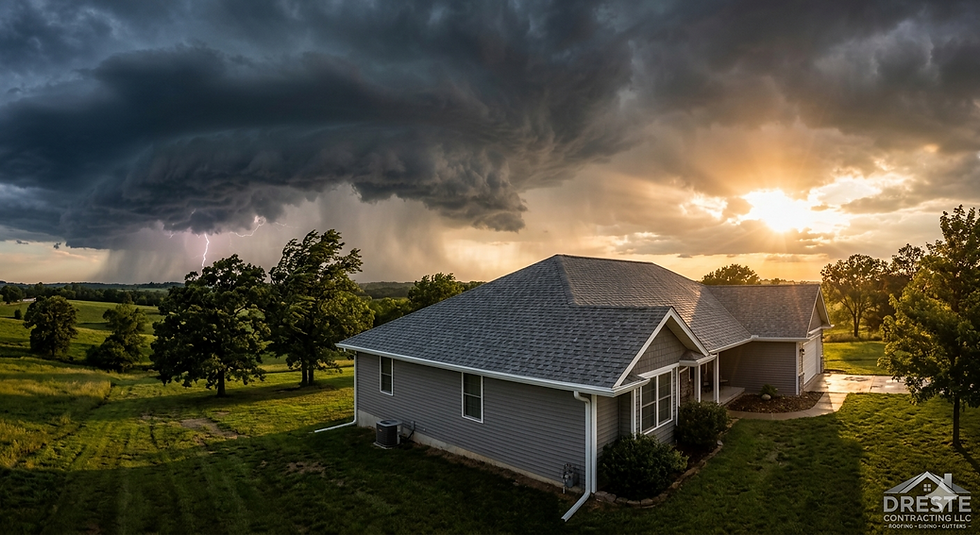
In Missouri, we have a saying: “If you don’t like the weather, wait five minutes.” While our changing seasons are part of the charm of living in the Ozarks and across the state, they can be incredibly tough on your home’s exterior. Between spring tornadoes, humid summers, and icy winters, your roof, siding, and gutters are constantly on the front lines of Missouri Storm Damage.
At Dreste Contracting LLC, we see firsthand how Missouri’s climate impacts local homes. Here is a breakdown of what to watch for and how to protect your investment.
1. Spring: The Season of High Winds and Hail
Missouri is located in a high-activity wind zone, frequently experiencing severe thunderstorms and tornadoes (FEMA, 2023). These storms bring two major threats:
Wind Damage: High-velocity winds can lift shingles, tear away siding panels, and even pull gutters right off the fascia board. Even if your roof looks okay from the ground, wind can "unseal" shingles, leaving your home vulnerable to leaks during the next rain.
Hail Impact: Large hail can bruise roofing shingles, knocking off the protective granules that shield your roof from UV rays. On siding, hail often leaves "dents" or "stars" that can lead to cracks over time.
2. Summer: The Humidity Factor
Missouri’s summer humidity isn’t just uncomfortable for us; it’s a challenge for your home’s materials.
Siding Expansion: Vinyl and wood siding expand and contract as temperatures and humidity levels fluctuate. If not installed correctly with room to "breathe," siding can warp or buckle.
Organic Growth: Persistent moisture encourages the growth of mold, mildew, and algae, especially on the north-facing sides of homes or under heavy tree cover.
3. Fall: The Gutter Gauntlet
As the leaves turn and fall, your gutter system becomes the most important part of your home.
The Weight of Clogs: When gutters fill with debris, they trap water. This added weight can cause gutters to sag or pull away from the house.
Foundation Risks: The primary job of gutters is to move water away from your foundation. In Missouri’s heavy autumn rains, a clogged gutter can lead to basement flooding or soil erosion around your home’s perimeter.
4. Winter: Ice Dams and Weight
Missouri winters are notorious for "ice-and-thaw" cycles.
Ice Dams: When heat escapes through your roof, it melts snow, which then refreezes at the cold eaves. This creates an ice dam that forces water back up under your shingles and into your walls (Baker, 1999).
Gutter Stress: Heavy snow and ice buildup in gutters can cause them to collapse if they aren't securely fastened or if they were already weakened by autumn debris.
Why a Professional Inspection Matters with Missouri Storm Damage
Damage to your roof, siding, or gutters isn't always obvious. Often, it's the "hidden" damage—like rotted sheathing under shingles or structural decay behind siding—that causes the most long-term trouble (DTIC, 1983).
At Dreste Contracting LLC, we specialize in identifying these issues before they become expensive disasters. Whether you need a post-storm inspection or a seasonal tune-up, we are here to ensure your home stays as tough as a Missourian.
Don’t wait for a leak to find you. Contact Dreste Contracting LLC today for a professional estimate on your roofing, siding, or gutter needs!
References
Baker, M. C. (1999). A Passive Approach to Practical Climate Control. Washington Conservation Guild.
DTIC. (1983). Principles for Protecting Wood Buildings from Decay. Defense Technical Information Center.
FEMA. (2023). Taking Shelter from the Storm: Building a Safe Room for Your Home or Small Business. Federal Emergency Management Agency.
Comments